
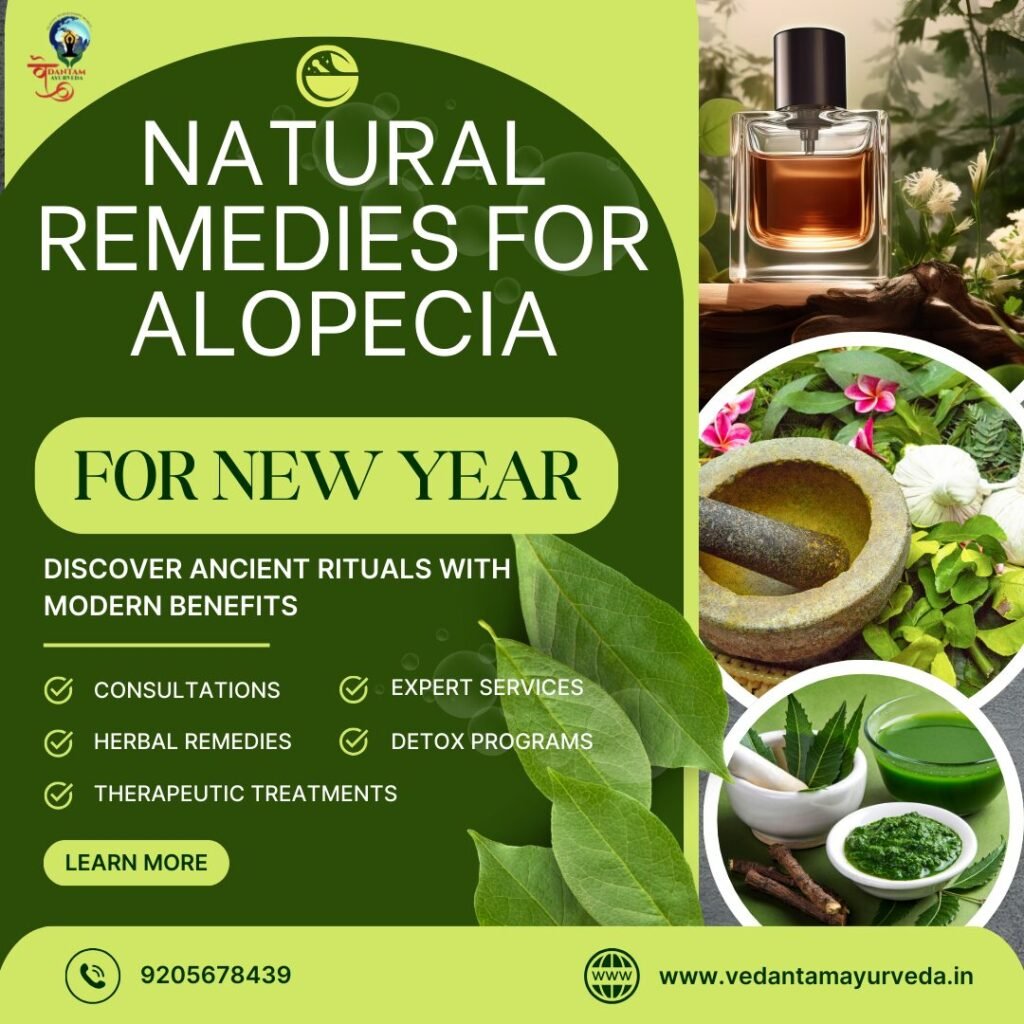
Hair loss is more than a cosmetic concern: it can deeply affect your confidence, mental health, and sense of identity. While pharmaceutical treatments exist, many people seek safer, more natural alternatives with fewer side effects.
Natural remedies: especially those rooted in Ayurveda: offer a holistic path to reversing hair loss, improving scalp health, and supporting long-term hair regrowth. At Vedantam Ayurveda, we combine India’s ancient herbal wisdom with modern understanding of scalp care to help you reclaim your hair naturally.
Why Choose Natural Remedies for Alopecia?
• Holistic healing: targets scalp nourishment, follicle stimulation, stress, and overall wellness
• Fewer side effects: gentler than corticosteroids or pharmaceutical treatments
• Supports root cause: addresses internal imbalances, not just external symptoms
• Can be combined: natural remedies complement medical treatments safely
• Cost-effective: many powerful herbs are affordable and widely available in India
💡 Natural remedies are supportive, not guaranteed cures. Always consult a dermatologist if hair loss is severe, sudden, or accompanied by other symptoms.
Top Ayurvedic Herbs for Natural Alopecia Treatment
1. Bhringraj (Eclipta alba): The King of Hair Herbs
Bhringraj is one of the most powerful herbs in Ayurveda for hair health. It stimulates hair follicles, strengthens roots, prevents premature greying, and supports scalp health.
• How to use (External): Apply warm Bhringraj oil to scalp; massage gently and leave overnight for maximum absorption
• How to use (Mask): Mix Bhringraj powder with yogurt or water into a paste; apply for 30 minutes, then rinse
• Best for: Hair fall, thinning, premature greying, dormant follicle stimulation
2. Amla (Indian Gooseberry): Scalp Nourisher
Amla is exceptionally rich in Vitamin C and antioxidants: crucial for hair strength, scalp health, and collagen synthesis.
• How to use (External): Amla oil scalp massage, or apply fresh Amla paste/juice directly to scalp
• How to use (Internal): Consume daily as fresh fruit, juice, or powder: supports internal hair health
• Best for: Scalp inflammation, brittle hair, pigmentation loss, Pitta-related hair fall
3. Brahmi (Bacopa monnieri): Stress & Scalp Soother
Brahmi is well known for its calming effects on the nervous system, making it ideal for stress-related hair loss.
• How to use (External): Apply Brahmi-infused oil to scalp or use Brahmi powder in hair masks
• How to use (Internal): 250–500mg or 1/2 tsp decoction twice daily
• Best for: Stress-induced hair loss, scalp regeneration, blood circulation improvement
4. Neem (Azadirachta indica): Scalp Cleanser & Antimicrobial
Neem is a natural antimicrobial and anti-inflammatory agent that creates a healthy scalp environment for hair growth.
• How to use: Grind neem leaves into a paste with water or coconut oil; apply for 30 min, then rinse
• Frequency: Once or twice a week
• Best for: Scalp infections, dandruff, fungal overgrowth, scalp inflammation
5. Shikakai (Acacia concinna): Natural Cleanser
Shikakai has been used in Ayurveda for centuries as a gentle, low-pH shampoo alternative that cleanses without stripping natural scalp oils.
• How to use: Use Shikakai powder as a hair wash, or mix with herbal decoctions as a hair mask
• Best for: Gentle cleansing, strengthening hair shafts, reducing scalp irritation
6. Fenugreek (Methi): Hair Strengthener
Soaked and ground fenugreek seeds make an effective scalp mask that reduces dandruff, strengthens hair, and promotes regrowth.
• How to use: Soak overnight, grind into paste, apply to scalp for 30 min before washing
• Best for: Hair fall, dandruff, hair thinning, scalp dryness
7. Aloe Vera: Scalp Soother
Aloe vera soothes irritated scalps, reduces inflammation, unblocks hair follicles, and hydrates both scalp and hair shaft.
• How to use: Apply fresh aloe vera gel directly to scalp; leave for 20–30 min before rinsing
• Best for: Sensitive scalp, blocked follicles, scalp dryness, mild inflammation
Weekly Ayurvedic Hair Care Routine for Alopecia
• Twice a week: Scalp massage with warm herbal oil (Bhringraj or Amla-infused): leave overnight if possible
• Once or twice a week: Wash with gentle Shikakai cleanser instead of harsh chemical shampoo
• Once a week: Apply Amla paste, Fenugreek paste, or Aloe Vera gel mask for 20–30 min
• Daily: Eat hair-friendly foods: fruits, greens, nuts, seeds, protein, and plenty of water
• Daily: Practice stress-reduction: yoga, pranayama, or meditation
Diet & Nutrition for Natural Hair Regrowth
What you eat is as important as what you apply. A hair-supportive diet includes:
• Leafy greens (spinach, fenugreek leaves, moringa): iron, folate, Vitamin K
• Legumes & lentils: protein, biotin, zinc
• Nuts & seeds (almonds, walnuts, flaxseeds, pumpkin seeds): omega-3, zinc, Vitamin E
• Fresh fruits (amla, pomegranate, mango, papaya): antioxidants, Vitamin C
• Dairy (milk, ghee, paneer): calcium, protein, Vitamin D
• Whole grains (oats, millets, rice): B vitamins, complex carbohydrates
Avoid: Processed foods, excess sugar, alcohol, fried foods, crash diets, and cold drinks.
Lifestyle Practices to Support Hair Regrowth
• Scalp massage: improves blood flow, delivers nutrients to follicles, stimulates dormant hair
• Gentle cleansing: avoid harsh shampoos that strip scalp oils; use natural alternatives
• Stress reduction: yoga, meditation, journaling, and nature walks reduce cortisol-related hair loss
• Adequate sleep: 7–8 hours supports tissue repair and hormone regulation
• Avoid heat styling, tight hairstyles, and chemical treatments that stress hair shafts
• Moderate sunlight: helps with Vitamin D, which plays a role in follicle cycling
Frequently Asked Questions
Q: Can natural remedies fully reverse alopecia patches?
For mild to moderate cases: especially those linked to stress, nutrition, or scalp imbalance: natural remedies can stimulate significant regrowth. For autoimmune or genetic alopecia, they help maintain scalp health and slow progression, but may not guarantee full reversal.
Q: How long before I see results?
With consistent treatment, many people notice reduced shedding in 4–6 weeks and visible improvement in 2–6 months. Patience and regularity are key.
Q: Are there any risks or side effects?
Natural remedies are generally low-risk. However, allergic reactions or scalp irritation are possible: always do a patch test before full application. Internal herbs should be taken under guidance if you have any health conditions.
Q: Can I use natural remedies alongside medical treatments?
Yes: herbal oils, scalp care, diet, and stress management complement dermatological treatments effectively. Inform your doctor about any herbs you use internally.
When Natural Remedies Are Not Enough
While natural remedies are powerful, some cases require professional medical attention:
• Autoimmune or genetic alopecia may need dermatological or immunological intervention
• Rapidly spreading patches or sudden large areas of hair loss require urgent evaluation
• Incorrect use of potent herbs (e.g., undiluted onion juice) can irritate or worsen the scalp
• If no improvement after 3–4 months of consistent care, consult a trichologist or Ayurvedic specialist
Vedantam Ayurveda’s Holistic Approach
At Vedantam Ayurveda, our personalized hair loss treatment approach includes:
• Dosha and scalp analysis to understand your unique hair loss type
• Customized herbal oil blends and hair packs using Bhringraj, Amla, Brahmi, Neem, and Shikakai
• Internal herbal formulations tailored to your constitution and severity
• Diet and lifestyle guidance for long-term hair health
• Panchakarma therapies in chronic or advanced cases
We believe hair reflects your inner health: and real, lasting transformation comes from within.
Contact Vedantam Ayurveda
Ready to begin your natural hair regrowth journey? Reach us at:
• Phone: +91-9205678439
• Email: support@vedantamayurveda.com
• Clinic: MZ 07/08, Sumedha Tower, RDC, Raj Nagar, Ghaziabad, Uttar Pradesh 201002
• Website: vedantamayurveda.in