
Melasma is a form of skin discolouration typically triggered by hormonal changes, sun exposure and genetic predisposition. Because hormonal and internal factors are involved, treatments that only target the surface pigment often see the discolouration return once treatment stops.
The Ayurvedic View of Melasma
In Ayurveda, melasma is generally linked to aggravated Pitta dosha, sometimes combined with Vata imbalance, especially in cases connected to pregnancy or hormonal shifts. This is why Ayurvedic treatment usually addresses diet, internal balance and topical care together, rather than topical treatment alone.
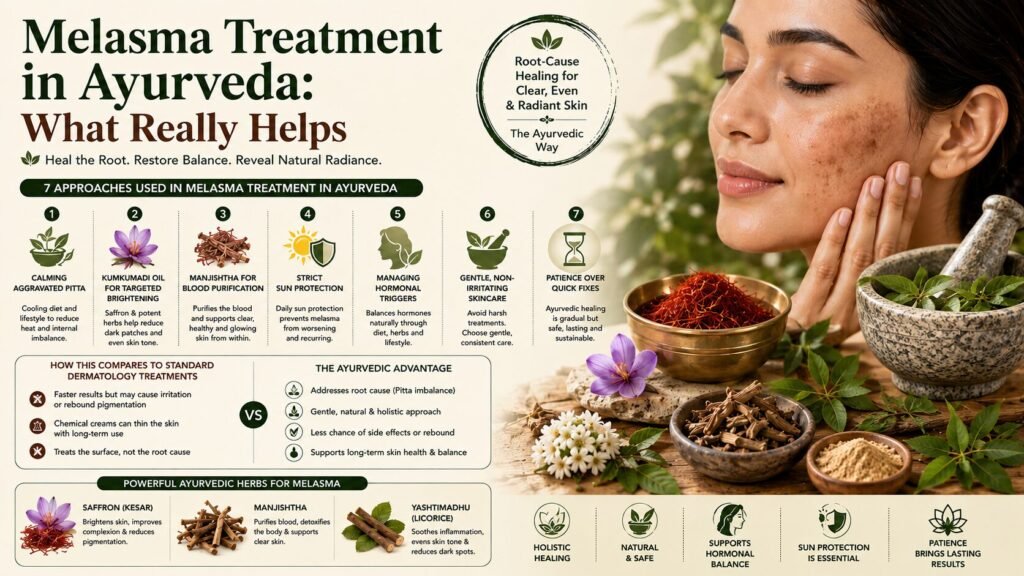
7 Approaches Used in Melasma Treatment in Ayurveda
1. Calming Aggravated Pitta
Reducing heaty, spicy and fried foods while increasing cooling foods is often the starting point, since Pitta imbalance is considered central to melasma.
2. Kumkumadi Oil for Targeted Brightening
One of the most established remedies here is kumkumadi oil, which uses saffron and other brightening herbs to gently work on discoloured patches over time.
3. Manjistha for Blood Purification
This herb is traditionally used to purify the blood, which Ayurveda considers relevant to skin conditions linked to internal imbalance, including melasma.
4. Strict Sun Protection
Since sun exposure is one of the strongest triggers for melasma, consistent protection is treated as essential to treatment, not optional.
5. Managing Hormonal Triggers
For melasma linked to pregnancy or hormonal changes, Ayurveda focuses on supporting overall hormonal balance through diet and lifestyle rather than only treating the skin in isolation.
6. Gentle, Non-Irritating Skincare
Harsh scrubs or aggressive chemical treatments can sometimes worsen melasma by irritating the skin. Ayurvedic routines favour gentler, consistent care instead.
7. Patience Over Quick Fixes
Ayurvedic melasma treatment tends to take longer than chemical peels or prescription creams, but is generally considered gentler and less likely to cause the rebound pigmentation that sometimes follows aggressive treatments.
How This Compares to Standard Dermatology Treatment
Dermatological treatments like hydroquinone creams often show faster initial results but can cause irritation or rebound pigmentation with long-term use. This is similar to the broader pattern discussed in our guide on pigmentation ayurvedic treatment, where gentler, root-cause approaches tend to be more sustainable, even if slower.
Choosing the Right Products
Our skincare range at Vedantam Ayurveda uses traditional proportions of these brightening herbs, so the actual benefits described in classical Ayurvedic texts are preserved rather than diluted for mass production.
The Research Behind These Ingredients
Studies on saffron and skin pigmentation have looked at its antioxidant and brightening properties, which supports why saffron-based formulations like kumkumadi oil have remained part of melasma-focused Ayurvedic routines for generations.
FAQs
Can melasma treatment in Ayurveda fully remove dark patches?
Results vary by individual, but many people see significant lightening and more even tone with consistent use over 2 to 4 months. Complete removal is not guaranteed with any treatment approach, Ayurvedic or otherwise.
Is Ayurvedic treatment safe during pregnancy-related melasma?
Topical herbal approaches are generally gentler, but it is best to consult a doctor before starting any new treatment during or shortly after pregnancy.
How long before melasma treatment in Ayurveda shows results?
Most people notice gradual lightening within 6 to 8 weeks, with more visible results typically around 3 months of consistent use.
Does melasma come back after Ayurvedic treatment stops?
Since triggers like sun exposure and hormonal changes can persist, ongoing sun protection and periodic maintenance are usually needed to keep results stable long term.
Get in Touch with Vedantam Ayurveda
If you would like personalised guidance from our Ayurvedic experts, or want to explore our range of authentic Ayurvedic products, we would love to hear from you.
• Phone: +91-9205678439
• Email: support@vedantamayurveda.com
• Address: Mzl 07/08, Sumedha Tower, Ansal Building, Ghaziabad, Uttar Pradesh
• Website: vedantamayurveda.in