
A healthy mouth is an important part of everyday wellness. Brushing, cleaning between the teeth, drinking enough water and having regular dental check-ups are simple habits that can help maintain oral health.
In Ayurveda, daily personal care is also an important part of a healthy routine. Ayurvedic oral care focuses on regular mouth-cleaning practices and mindful daily habits rather than waiting until a problem becomes uncomfortable.
The goal is not to replace modern dental care. Instead, traditional practices can be used as supportive habits alongside evidence-based oral hygiene.
The NHS guide to taking care of your teeth and gums also recommends regular brushing, cleaning between the teeth and maintaining good oral hygiene.
What Is Ayurvedic Oral Care?
Ayurvedic oral care refers to traditional Ayurvedic approaches to maintaining mouth and gum cleanliness as part of a daily routine.
Ayurvedic traditions have included practices such as tongue cleaning, oil-based mouth practices and attention to food and daily habits.
However, traditional practices should be approached carefully. They should support—not replace—basic dental care such as brushing with fluoride toothpaste, cleaning between teeth and visiting a dentist when necessary.
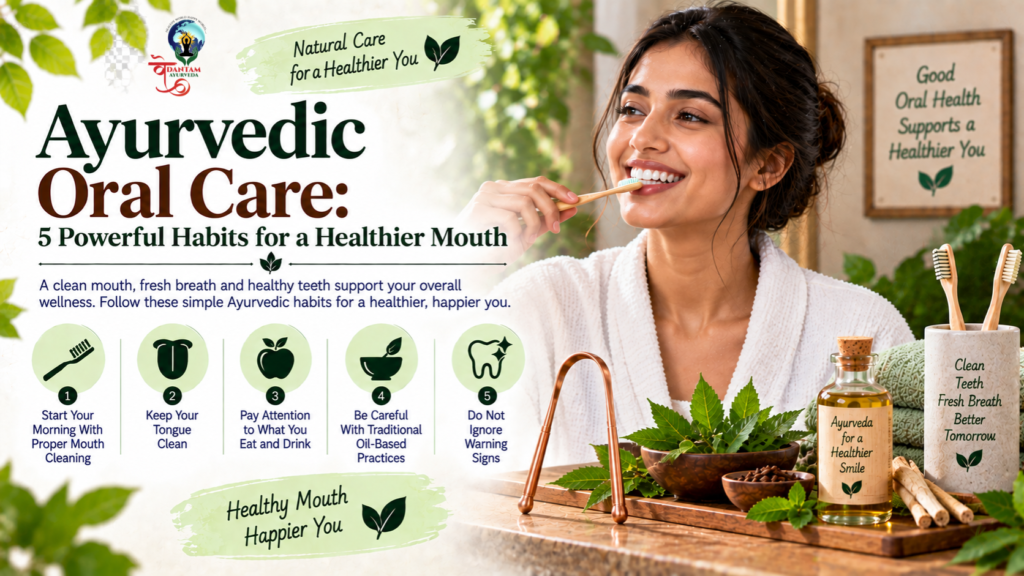
1. Start Your Morning With Proper Mouth Cleaning
Morning mouth cleaning is one of the simplest habits you can maintain.
During sleep, saliva flow changes and bacteria can accumulate in the mouth. Cleaning your teeth in the morning helps remove plaque and food particles.
A practical morning routine can include:
- Brush your teeth gently.
- Clean between your teeth.
- Clean your tongue carefully.
- Rinse your mouth with water.
- Drink water according to your normal routine.
Avoid brushing too aggressively because excessive pressure can irritate the gums and wear down tooth surfaces.
For everyday dental hygiene, the NHS dental cleaning guidance provides practical advice on brushing and cleaning between teeth.
2. Keep Your Tongue Clean
The tongue can collect bacteria, food particles and coating.
Gentle tongue cleaning is a traditional part of Ayurvedic oral care. A tongue cleaner can be used carefully without scraping too hard.
The important point is moderation.
You do not need to repeatedly scrape the tongue or apply excessive pressure. Gentle cleaning once as part of your morning routine is generally enough.
If your tongue has persistent discoloration, pain, sores or unusual changes, it is better to have the problem assessed by a dental or healthcare professional rather than trying to treat it only at home.
3. Pay Attention to What You Eat and Drink
Oral health is also connected with everyday eating habits.
Frequent sugary snacks and drinks can increase the risk of tooth decay. Regular meals, adequate water intake and limiting unnecessary sugary foods can make oral hygiene easier to maintain.
Simple habits include:
- Drink water regularly.
- Limit frequent sugary snacks.
- Avoid constantly sipping sweetened drinks.
- Include a balanced variety of foods.
- Rinse your mouth with water after meals when appropriate.
These habits work best when combined with regular brushing and dental care.
4. Be Careful With Traditional Oil-Based Practices
Oil-based mouth practices are sometimes discussed as part of traditional Ayurvedic oral care.
Some people use oil pulling as a traditional wellness practice. However, it should not be considered a replacement for brushing, fluoride toothpaste, flossing or professional dental treatment.
If someone chooses to include such a practice, it should be done carefully and the oil should never be swallowed.
Children should not perform oil-based mouth practices without appropriate adult supervision because of the risk of accidentally inhaling or swallowing the oil.
People with dental pain, swelling, bleeding gums or suspected infection should seek professional dental advice instead of relying on home practices.
5. Do Not Ignore Warning Signs
Daily oral care is useful, but it cannot solve every dental problem.
Pay attention to symptoms such as:
- Persistent toothache
- Swollen gums
- Frequent gum bleeding
- Severe sensitivity
- Bad breath that does not improve
- Loose teeth
- Mouth sores that do not heal
- Facial or jaw swelling
These symptoms can have different causes and may require professional assessment.
The World Health Organization’s oral health information explains that oral diseases are common and that prevention and appropriate care are important for maintaining oral health.
Ayurvedic Oral Care and Modern Dental Hygiene
Traditional Ayurveda and modern dentistry do not have to be viewed as competing approaches.
A sensible daily routine can combine traditional wellness habits with established dental hygiene:
| Daily Habit | Purpose |
| Brush teeth twice daily | Helps remove plaque |
| Clean between teeth | Removes debris from areas brushing may miss |
| Clean the tongue gently | Helps maintain tongue cleanliness |
| Drink water | Supports normal mouth moisture |
| Limit frequent sugary foods | Helps reduce tooth-decay risk |
| Dental check-ups | Helps identify problems early |
The foundation should remain evidence-based dental hygiene.
A Simple Morning Oral Care Routine
You can keep your morning routine straightforward:
Step 1: Drink water if it is part of your normal morning routine.
Step 2: Brush your teeth gently with fluoride toothpaste.
Step 3: Clean between your teeth.
Step 4: Clean your tongue gently.
Step 5: Rinse your mouth.
This simple routine is easier to maintain consistently than a complicated routine with too many products or practices.
Who Should Be More Careful?
People with existing dental conditions should not depend only on home remedies.
Extra care may be appropriate for people experiencing:
- Gum disease
- Tooth decay
- Frequent mouth ulcers
- Severe tooth sensitivity
- Dental infections
- Persistent dry mouth
- Ongoing bad breath
A dentist can identify the underlying cause and recommend appropriate treatment.
Why Consistency Matters More Than Complexity
Good oral hygiene does not need to be complicated.
A simple routine followed every day can be more practical than trying many different traditional or natural remedies.
Ayurvedic oral care can be viewed as part of a broader personal-care routine, while regular brushing, interdental cleaning and professional dental care remain important foundations of oral health.
Why Choose Vedantam Ayurveda?
Vedantam Ayurveda focuses on Ayurvedic wellness, natural care and lifestyle practices. Its services include personalised skin and hair care approaches and traditional Ayurvedic therapies.
The clinic also provides information around natural wellness, diet and everyday lifestyle practices. Learn more about Vedantam Ayurveda’s services and its approach to Ayurveda.
Our Contact
- Phone: +91-9205678439
- Email: support@vedantamayurveda.com
- Address: MZL 07/08, Sumedha Tower, Ansal Building, Raj Nagar, Ghaziabad, Uttar Pradesh