
Table of Contents
- What Is Ayurvedic Clothing Care?
- 5 Powerful Ayurvedic Clothing Care Habits
- Choosing Fabrics for Comfortable Skin
- Ayurvedic Clothing Care for Different Seasons
- Clothing and Skin Irritation
- Clothing Care After Exercise
- Common Clothing-Care Mistakes
- A Simple Ayurvedic Clothing Care Routine
Clothing is an important part of everyday life, but it can also affect how comfortable your skin feels.
Tight clothing, rough fabrics, sweat, damp clothes and fragranced laundry products can sometimes irritate sensitive skin.
A simple Ayurvedic clothing care routine focuses on cleanliness, comfort and choosing clothing according to the weather and your daily activity.
This idea fits with Ayurveda’s broader focus on lifestyle and daily habits. At the same time, modern dermatology also recognises that clothing, heat, sweating and certain products can contribute to skin irritation in some people.
What Is Ayurvedic Clothing Care?
Ayurvedic clothing care means paying attention to clothing as part of your everyday personal-care and wellness routine.
It does not mean that one particular fabric is universally healthy.
Instead, consider:
- Weather
- Sweat
- Activity level
- Skin sensitivity
- Clothing fit
- Fabric texture
- Laundry products
A comfortable clothing routine should allow the skin to remain reasonably clean, dry and free from unnecessary friction.
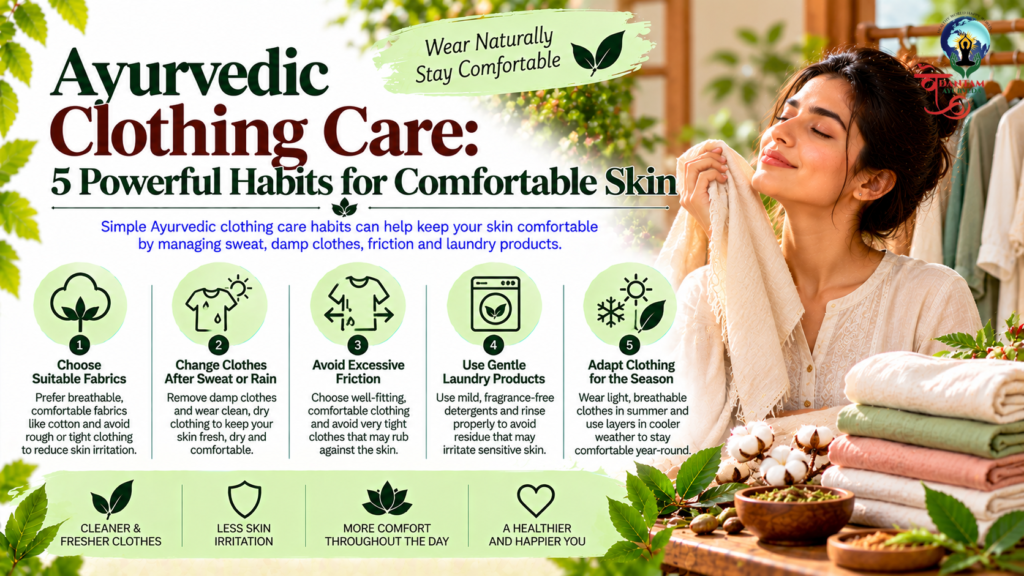
1. Ayurvedic Clothing Care for Different Weather
Your clothing should change according to temperature and humidity.
During Hot Weather
Choose comfortable, breathable clothing that does not trap excessive heat.
Loose-fitting clothes may also feel more comfortable when you are sweating.
During Cooler Weather
Use layers so that you can adjust your clothing according to temperature.
During Humid Weather
Pay attention to dampness and sweat.
If clothing becomes heavily wet with sweat or rain, changing into dry clothing can improve comfort.
An Ayurvedic clothing care routine should therefore be flexible rather than following one clothing rule throughout the year.
2. Ayurvedic Clothing Care After Sweat or Rain
After exercise, outdoor work or heavy sweating, clothes can remain damp against the skin.
For some people, prolonged moisture and friction can contribute to irritation.
A simple routine is:
Sweat heavily → change clothes → clean the skin when needed → put on clean, dry clothing.
This is particularly useful for areas where clothing remains close to the skin.
If you regularly exercise, keep an extra clean shirt or suitable clothing available when practical.
3. Ayurvedic Clothing Care to Reduce Skin Friction
Friction can make already-sensitive skin feel worse.
Very tight clothing may rub areas such as:
- Neck
- Waist
- Underarms
- Inner thighs
- Groin
- Ankles
If you notice irritation in one particular area, consider whether clothing fit or fabric texture could be contributing.
For people with sensitive or dry skin, dermatologists commonly recommend gentle skin-care products and avoiding known triggers. Clothing that feels rough or irritating can also be an individual trigger. (American Academy of Dermatology)
4. Ayurvedic Clothing Care and Laundry Products
Your clothing touches your skin for many hours.
Laundry detergent, fabric softener and fragrance can therefore matter, especially for people with sensitive skin.
If your skin repeatedly becomes itchy or irritated after wearing freshly washed clothes, consider whether a laundry product could be contributing.
For sensitive skin, you may prefer:
- Fragrance-free laundry products
- Proper rinsing
- Avoiding unnecessary fabric softeners
- Washing heavily sweaty clothes promptly
The American Academy of Dermatology recommends fragrance-free skin-care products for people whose skin is dry or sensitive because fragrance can cause irritation in some individuals. (American Academy of Dermatology)
5. Ayurvedic Clothing Care for Clean and Dry Clothes
Clean clothing is an important part of personal hygiene.
After washing clothes, make sure they dry properly before storing or wearing them.
Avoid storing clothes while they are still damp.
Pay particular attention to:
- Towels
- Workout clothes
- Socks
- Undergarments
- Clothes exposed to heavy sweat
- Rain-soaked clothing
Proper drying can help prevent unpleasant odours and maintain clothing freshness.
Choosing Fabrics for Comfortable Skin
There is no single fabric that is perfect for everyone.
Some people prefer cotton or other breathable materials because they feel comfortable in warm weather.
Others may tolerate synthetic fabrics without problems.
Your own skin response matters.
If a particular fabric consistently causes itching, sweating or friction, consider changing it.
Cotton Clothing
Cotton is often comfortable for many people, particularly in warm weather.
However, cotton is not automatically suitable for everyone or every situation.
If it becomes soaked with sweat and stays wet, it can still feel uncomfortable.
Synthetic Fabrics
Some synthetic fabrics are designed to move sweat away from the body and may be useful during exercise.
However, if a particular material causes irritation, choose another option.
Wool and Rough Fabrics
Some people find rough fabrics uncomfortable against sensitive skin.
If necessary, use a soft layer between the fabric and your skin.
Ayurvedic Clothing Care for Different Seasons
Summer
- Choose comfortable clothing.
- Avoid unnecessary layers.
- Change heavily sweaty clothes.
- Protect exposed skin from strong sunlight.
- Keep clothing clean and dry.
Monsoon
- Change rain-soaked clothes quickly.
- Dry clothes completely.
- Avoid wearing damp clothing for long periods.
- Keep towels dry.
- Wash heavily sweaty clothes regularly.
Winter
- Use layers.
- Avoid fabrics that cause itching.
- Moisturise dry skin.
- Wash clothes appropriately.
- Avoid excessively hot water when bathing if your skin is dry.
Dermatologists recommend lukewarm rather than hot water for people with dry or sensitive skin, along with moisturising after bathing. (American Academy of Dermatology)
Clothing and Skin Irritation
Sometimes skin irritation is not caused by clothing itself.
Other possible factors can include:
- Detergent
- Fragrance
- Sweat
- Heat
- A skin condition
- Allergic reaction
- Friction
- Personal-care products
Therefore, changing clothes may not solve every skin problem.
If a rash continues, becomes painful or spreads, professional assessment may be necessary.
Clothing Care After Exercise
Exercise creates more sweat and friction.
After exercise:
Step 1
Change out of heavily sweaty clothes when practical.
Step 2
Clean your skin appropriately.
Step 3
Dry yourself properly.
Step 4
Put on clean clothing.
Step 5
Wash sweaty workout clothes rather than leaving them damp in a bag for a long period.
This simple routine can make post-workout hygiene more comfortable.
Common Clothing-Care Mistakes
Wearing Wet Clothes for Hours
Damp clothing can feel uncomfortable and may increase friction.
Choosing Very Tight Clothes
Constant rubbing can irritate sensitive areas.
Using Too Much Fragrance
Strongly fragranced laundry products may irritate some sensitive skin.
Storing Damp Clothes
Clothes should be dried properly before storage.
Wearing Dirty Workout Clothes Again
Sweaty clothes should be washed rather than repeatedly reused without cleaning.
Ignoring Repeated Skin Reactions
If one particular fabric or laundry product repeatedly causes irritation, pay attention to the pattern.
A Simple Ayurvedic Clothing Care Routine
Morning
Choose clothing according to the weather and your planned activity.
During the Day
If clothes become heavily sweaty or wet, change when practical.
After Exercise
Change out of sweaty clothing and clean the skin appropriately.
Evening
Place used clothes in the appropriate laundry area instead of leaving damp clothes in a closed bag.
Laundry Day
Wash clothes properly and dry them completely before storing.
Is Natural Fabric Always Better?
Not necessarily.
The label “natural” does not automatically mean a fabric will be comfortable for every person.
Skin comfort depends on several factors:
- Fabric texture
- Fit
- Temperature
- Sweat
- Washing products
- Individual sensitivity
Choose clothing based on how your skin responds rather than relying only on marketing claims.
Why Choose Vedantam Ayurveda?
Vedantam Ayurveda’s approach includes Ayurvedic wellness, natural lifestyle practices and personalised skin and hair-care services.
Its website describes Ayurveda as a holistic traditional system that includes lifestyle, diet and personal-care approaches. (NCCIH)
You can learn more about Vedantam Ayurveda and its Ayurvedic services.
Our Contact
- Phone: +91-9205678439
- Email: support@vedantamayurveda.com
- Address: MZL 07/08, Sumedha Tower, Ansal Building, Raj Nagar, Ghaziabad, Uttar Pradesh