
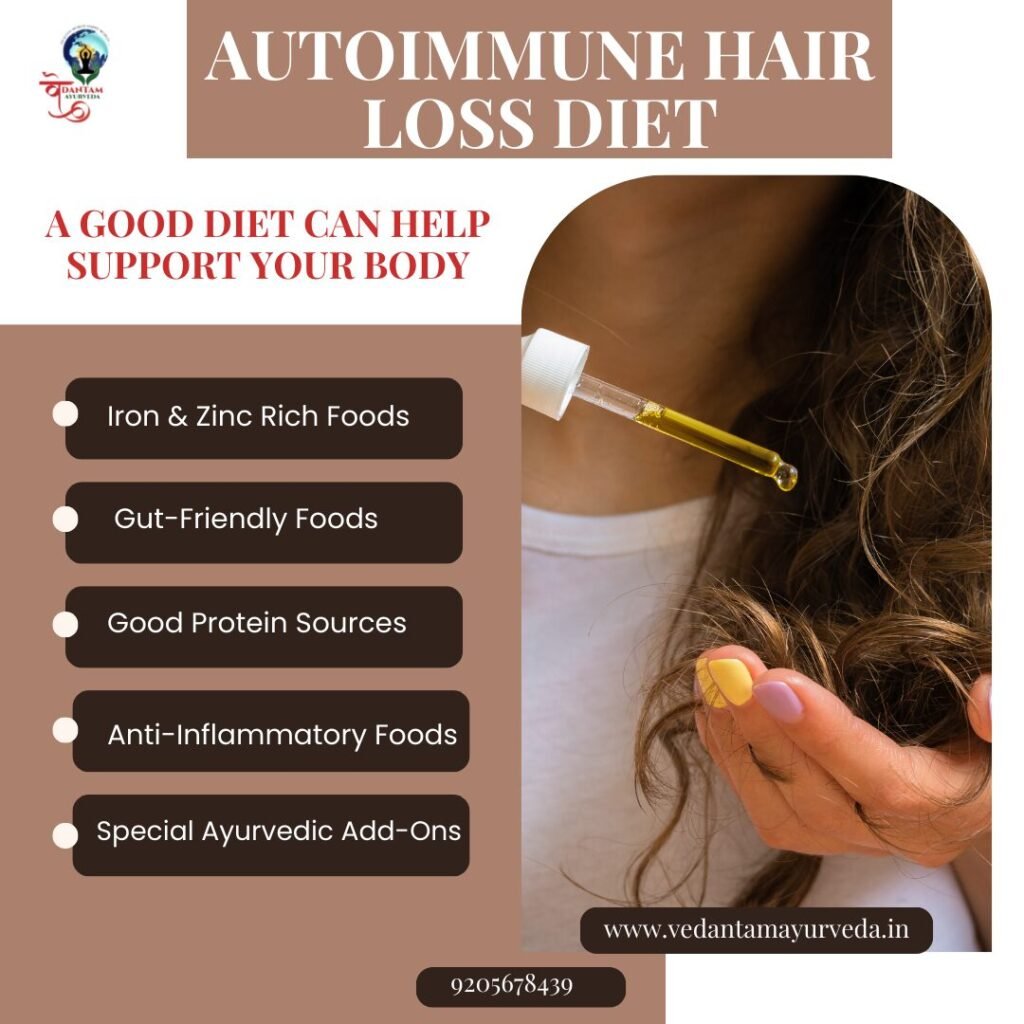
Autoimmune Hair Loss Diet
By Vedantam Ayurveda—MZ, 07/08, Sumedha Tower, RDC, Block 1, P & T Colony, Raj Nagar, Ghaziabad, Uttar Pradesh 201002—+91-9205678439
Beginning
Hair loss can be very upsetting for many reasons, including how it looks and how it can affect a person’s confidence and emotional health. When hair loss is caused by an autoimmune disease like alopecia areata (AA), the immune system mistakenly attacks hair follicles, which can lead to patchy baldness or even a lot of hair loss.
Many people look for complementary or supportive ways to help their hair health, even though modern medicine has treatments like immunosuppressants and topical therapies. One of the most natural ways to do this is through diet.
We at Vedantam Ayurveda believe that healing starts from the inside. A diet that is balanced, full of nutrients, and anti-inflammatory can help hair follicles grow, support immune system regulation, and make the scalp healthier overall. In this article, we talk about the rules of an “autoimmune hair loss diet,” which foods to eat and which to avoid, and how to plan meals that will make your hair stronger and your immune system more balanced.
Why diet is important for autoimmune hair loss
Hair isn’t just for looks; each strand grows from a tiny organ called a hair follicle. Follicles need a steady scalp environment, oxygen, and nutrients to grow hair that is healthy. In autoimmune hair loss (like Alopecia Areata), immune cells attack hair follicles. Damage can get worse if there is inflammation or not enough nutrients.
Hair thinning and loss have been linked to not getting enough of certain nutrients, especially iron, zinc, vitamin D, biotin (B-vitamins), and antioxidants.
Healthline
+2
Hospitals in Medicover
+2
Diet may affect inflammation and immune system balance. Some foods can help calm immune responses and help hair follicles heal.
The Autoimmune Nutrition Clinic
+2
Lordhair.com
+2
A balanced diet helps not only your hair but also your overall health. It gives you more energy, balances your hormones, makes your skin and scalp healthier, and makes you better able to handle stress, all of which help hair grow back.
So, diet alone may not “cure” autoimmune hair loss, but it does set the stage for other treatments (Ayurvedic therapies, lifestyle changes, scalp care) and makes the body better able to heal.
Important Nutrients for Hair and Immune Health
If you have hair loss caused by an autoimmune disease, these are the nutrients and foods you should focus on.
1. Protein
Keratin, a structural protein, makes up most of hair. This means that getting enough protein is important for hair regrowth and follicle strength. Lean meats, eggs, fish, poultry, legumes (like lentils and beans), paneer or tofu (for vegetarians), nuts, and seeds are all good sources.
Medicover Hospitals +2 drbatras.com +2
2. Iron and Other Minerals
Iron is necessary for moving oxygen around. Anemia, or low iron levels, can cause hair to thin out or fall out too much. Spinach, beans, lentils, red meat, eggs, and leafy greens all help keep iron levels stable.
Nutritionist Resource +2
Medicover Hospitals +2
Zinc: Zinc helps the immune system work properly and repairs hair follicles. Foods high in zinc, like pumpkin seeds, nuts, legumes, fish, and eggs, are good for hair follicles.
+2 Autoimmune Nutrition Clinic
drbatras.com +2
Selenium and other trace minerals help protect against free radicals, make proteins, and keep the scalp healthy in general. Most adults get enough selenium from their regular diet, which includes seafood, nuts, and whole grains.
The Nutrition Insider +1
3. Antioxidants and vitamins (A, B, C, D, E, and Biotin)
Vitamin A and beta-carotene are good for the health of your scalp and skin. They help keep sebum production going, which protects your hair and scalp. Sweet potatoes, carrots, leafy greens, egg yolks, oily fish, and dairy (if you can handle it) all have it.
The Times of India
+2
PMC
+2
Biotin and B-vitamins are important for making keratin and breaking down energy. Eggs, whole grains, legumes, nuts, seeds, dairy, and foods that have been fortified are all good sources.
healthieruny.com
+1
Vitamin C helps the body absorb iron and make collagen, which makes hair stronger and keeps the follicles healthy. Fruits like citrus and berries, bell peppers, and leafy greens are all great sources.
The Indian Times
+2
The Indian Times
+2
Vitamin D: A lot of people with autoimmune diseases, like AA, don’t get enough vitamin D. Vitamin D is important for regulating the immune system and the growth of hair follicles. Foods rich in vitamin D or fortified with it, or getting enough sun, can help.
PMC
+2
Healthline
+2
Vitamin E and antioxidants help fight oxidative stress, protect the scalp and hair follicles, and lower inflammation. Nuts, seeds, leafy greens, and some oils are good sources of vitamin E and other antioxidants.
The Indian Times
+2
Lordhair.com
+2
4. Fats and Omega-3 Fatty Acids That Are Good for You
Omega-3 fatty acids help with circulation in the scalp and reduce inflammation. Both of these things are important when dealing with autoimmune or inflammatory hair loss. Fatty fish like salmon, mackerel, and sardines, as well as flaxseeds, walnuts, and chia seeds are all good sources.
The Indian Times
+2
PMC
+2
5. Foods that help the gut and the immune system
Your gut health and your immune health are very closely linked. A healthy gut microbiome can help control how the immune system works, which may help with autoimmune conditions that affect hair. Probiotic or fermented foods like yogurt, kefir, and fermented vegetables, as well as whole grains, legumes, and vegetables high in fiber, can all help keep your gut healthy.
A Sample Diet Plan for Autoimmune Hair Loss (Indian-Style / Ayurvedic-Friendly)
This is an example of a daily meal plan that can be changed to fit Indian foods and way of life. It can also be used as a guide for anyone who wants to keep their hair healthy and their immune system in balance.
Meal or Time of Day Food Suggestions / Notes
The first meal of the day Omelette or boiled eggs with sautéed spinach or mixed greens, or poha or upma made with millets or quinoa, vegetables, and a handful of nuts, or A smoothie made with yogurt or almond milk, a banana, berries, and flaxseeds.
Snack in the middle of the morning A handful of nuts (like almonds or walnuts) or fresh fruit (like citrus, papaya, or guava).
Lunch Brown rice or millet, whole-grain roti, dal or lentils, a big serving of leafy greens or mixed vegetables (like spinach, fenugreek, carrot, and bell pepper), salad with cucumber, tomatoes, and bell peppers, and a small serving of lean meat or fatty fish (if you’re not vegetarian) or paneer or tofu (if you are).
Snack Time You can have roasted seeds (like pumpkin or sunflower), buttermilk or curd (if you can handle dairy), herbal tea (like ginger or turmeric), and a fruit or nuts.
Nighttime Stir-fry vegetables in olive or coconut oil, grill fish or chicken (if you’re not a vegetarian), make a salad with mixed sprouts, or make vegetable soup or bone broth (if you’re not a vegetarian).
Dinner Mixed vegetable sabzi with whole-grain roti or millet flatbread, or khichdi (millet, moong dal, and vegetables) with sautéed greens and a small serving of lean protein.
Before bed, you can also have a cup of warm almond milk (unsweetened).
General Advice Drink a lot of water, add healthy fats like olive oil, coconut oil, and flaxseed oil, and use herbs and spices like turmeric, ginger, and garlic for their anti-inflammatory properties. Make sure you get a variety of foods to get all the nutrients you need.
Stay away from junk food, processed foods, and too many fried foods.
You can change this plan to fit your dietary needs, such as being vegetarian, non-vegetarian, vegan, etc., as well as your individual nutritional needs, tolerance, and sensitivities.
Ayurvedic and Lifestyle Factors (From the Point of View of Vedantam Ayurveda)
We at Vedantam Ayurveda know that diet is just one part of the healing process. Alopecia Areata and other types of autoimmune hair loss are often caused by imbalances in more than just diet. They can also be caused by stress, lifestyle, digestion, immunity, and even mental health. This is how we combine Ayurvedic principles with dietary advice:
Ayurveda stresses the importance of good digestion (agni) for getting nutrients and keeping the immune system in balance.
Eating too much, not eating at regular times, eating a lot of fried foods, and being stressed can all hurt agni, which makes it harder for the body to absorb nutrients and makes toxins (ama) build up, which can make autoimmunity worse.
Eating simple, healthy, seasonal foods, especially warm meals that are easy to digest, is good for our digestion and the health of our scalp and hair.
Detoxification: Gentle detoxing every now and then (with help) can help get rid of toxins that have built up and may cause immune reactions. This could mean eating lighter meals, drinking more water, drinking herbal teas, and staying away from processed foods.
Herbs and Spices: Many Ayurvedic herbs and spices can help reduce inflammation, fight free radicals, and change the immune system. Turmeric, for instance, is well-known for its anti-inflammatory properties when mixed with black pepper to help it be absorbed. Ginger, garlic, cinnamon, fenugreek (methi), and leafy herbs help digestion and lower inflammation. You can use these every day in your cooking.
Stress relief and balancing your life: Stress can make autoimmune diseases worse or start them. Yoga, meditation, pranayama, getting enough sleep, and light exercise are all things that can help lower stress, change how the immune system works, and improve blood flow to the scalp.
A holistic treatment plan includes Ayurvedic hair-care methods like herbal oils, scalp massage (abhyanga), head compresses, and detoxification therapies. These can help hair grow back by working with the body’s natural healing processes.
What Science Says: Proof and Limits
There isn’t a lot of scientific evidence linking diet to stopping autoimmune hair loss, but it is growing. A few things to think about:
Numerous studies and clinical observations indicate that individuals with autoimmune hair loss frequently demonstrate deficiencies in vitamin D, zinc, folate, and other essential nutrients relative to healthy individuals, implying that such deficiencies may exacerbate or initiate hair loss.
Healthline
+2
Hospitals in Medicover
+2
A case study documented complete hair regrowth, encompassing eyelashes and eyebrows, in a pediatric patient experiencing significant hair loss, following a dietary and supplementation protocol high in protein, vitamin D, omega-3 fatty acids, zinc, and other nutrients for several months.
PMC
Conversely, numerous dermatologists and nutritionists warn that there is no conclusive evidence that diet alone can remedy autoimmune hair loss. Diet should be viewed as a supplementary therapy, rather than a substitute for medical or Ayurvedic treatment.
Healthline
+2
Hospitals in Medicover
+2
If you don’t have someone keeping an eye on you, very strict diets can make you miss out on important nutrients, which can make hair loss worse or hurt your health in other ways.
Healthline
+2
Hospitals in Medicover
+2
So, even though the right diet may make the body a better place for hair to grow back and help the immune system work better, it probably won’t work for everyone.
Results can differ from individual to individual, influenced by severity, genetic predispositions, additional health considerations, and temporal consistency.
Common Myths and Wrong Ideas
There are a lot of myths and “miracle diet” claims out there when it comes to hair loss solutions, especially for autoimmune types. Be careful about these things:
“Onion juice cures alopecia” — There have been some small studies on topical onion juice for hair loss caused by autoimmune diseases, but the evidence is not strong or consistent.
Marie Claire +2
The Times of India +2
“Stop eating gluten and dairy; your hair will grow.” This may help some people with sensitivities feel better; for others, it may not make a difference. There is no sure thing.
Healthline +2
Medicover Hospitals
“Supplements alone can fix it” — If there is a known deficiency (like low vitamin D or iron), supplements may help. But taking a lot of vitamins and minerals without thinking about it might not help and could even be bad for you.
Healthline +2
Medicover Hospitals +2
“Autoimmunity can be cured by diet.” Autoimmune diseases are complicated and involve genetics, the environment, the immune system, and lifestyle choices. Diet is one part of a bigger picture of health. It’s helpful, but it’s not a magic bullet.
At Vedantam Ayurveda, we believe in a balanced, moderate, food-based approach that respects the body’s needs, promotes overall health, and works well with other forms of therapy.
Making a diet for hair loss caused by autoimmune diseases—useful tips
If you’re ready to start a healing diet to help your hair grow back after autoimmune conditions, here are some useful tips:
Start with a gentle evaluation: Write down what you eat most of the time, what you stay away from, and where you might be getting too many processed foods, sugars, or not enough of certain nutrients.
Whole foods should be your main focus. This means fresh fruits and vegetables, whole grains or millets, legumes, nuts and seeds, lean proteins (or plant proteins if you’re vegetarian), healthy fats (like olive oil, coconut oil, and flaxseed oil), and if you eat animal products, lean meats, fish, and eggs.
Add foods that are high in antioxidants and anti-inflammatories, like leafy greens, colorful vegetables (bell peppers, carrots, sweet potatoes), berries, nuts, seeds, fatty fish, turmeric, ginger, and garlic.
Make sure you get enough micronutrients, such as iron (from spinach, lentils, and meat), zinc (from pumpkin seeds, nuts, and fish), vitamin D (from sun exposure, fatty fish, and fortified foods), B-vitamins and biotin (from eggs, legumes, and whole grains), and vitamins A, C, and E.
Drink a lot of water and eat foods that are good for digestion. If you can, eat probiotic or fermented foods like yogurt, kefir, curd, and fermented vegetables.
Cut back on “trigger” foods: If you think you might be sensitive, cut back on processed foods, refined sugar, synthetic additives, too much fried or oily food, too much dairy or gluten, or too much of any of these.
Make healthy choices: Get enough sleep, do gentle exercise or yoga on a regular basis, manage stress (through meditation, breathing, and relaxation), keep your scalp clean, and give it a gentle massage (with Ayurvedic oils if you use them). Don’t use harsh chemicals on your hair or let it get too hot.
Check your nutrient levels: If you can, check your blood levels of iron, vitamin D, zinc, and other nutrients to make sure you’re not lacking. If you need to, think about getting guided supplements, but only with supervision.
Be patient and stick with it. It takes time for hair to grow back, especially if you have an autoimmune disease. It could take months to see results. It’s better to stick to a healthy diet, lifestyle, and care than to look for quick fixes.
For a holistic healing approach, use the diet as a base and add Ayurvedic treatments like herbal therapies, scalp oil massage, detox routines, and stress reduction.
Why You Should Choose Vedantam Ayurveda
We at Vedantam Ayurveda, located at MZ, 07/08, Sumedha Tower, RDC, Block 1, P & T Colony, Raj Nagar, Ghaziabad, UP, specialize in helping people with hair loss, including autoimmune hair loss (Alopecia Areata).
We offer personalized consultations that take into account your dosha, diet, lifestyle, and history of hair loss.
We make personalized diet and lifestyle plans that are based on Ayurvedic principles but also work with modern nutritional science.
We believe in Ayurvedic treatments for the scalp and hair, such as herbal oil massages, detoxing, herbal tonics, and Ayurvedic herbs that are good for your body type and condition.
We focus on whole-person healing, which includes things like digestive health, immune balance, mental health, and scalp care, not just “hair growth.”
Call us at +91-9205678439 if you need help, advice, or a full treatment plan for autoimmune hair loss. We think that with the right food, balance, and care, you can help your body heal itself and give your hair the best chance to grow back.
Conclusion
Autoimmune hair loss — such as in Alopecia Areata — can feel overwhelming. But you do not have to surrender hope. While there is no single “cure,” a properly designed, nutrient-dense, anti-inflammatory diet, combined with healthy lifestyle and compassionate Ayurvedic care, can create the conditions for hair-follicle recovery and supportive immune function.
At Vedantam Ayurveda, we believe in healing from within — balancing the body, calming the immune system, nourishing the scalp — and helping you reclaim not just hair, but confidence and well-being. Take the first step with a balanced plate: whole foods, wholesome meals, natural ingredients.
Your body hears you.
Your hair may respond.
References & What Research Shows Nutrient deficiencies (vitamin D, zinc, folate) are common among people with autoimmune hair loss, and may exacerbate conditions like Alopecia Areata.
Healthline +2 Medicover Hospitals +2 Case evidence suggests that dietary and supplementation intervention (protein, vitamin D, omega-3s, zinc) has led to hair regrowth in at least one pediatric patient with severe hair loss.
PMC A balanced diet rich in proteins, vitamins, minerals, antioxidants, and healthy fats helps support scalp health, hair-follicle strength, and overall immune regulation — foundational for any hair-regrowth effort under autoimmune stress.
The Times of India +3 Medicover Hospitals +3 Nutritionist Resource +3 While some alternative treatments (topical onion juice, extreme elimination diets) are popular, evidence is limited — and diet should complement, not replace, professional care. Marie Claire +2 Healthline +2