
Table of Contents
- What Is an Ayurvedic Seasonal Routine?
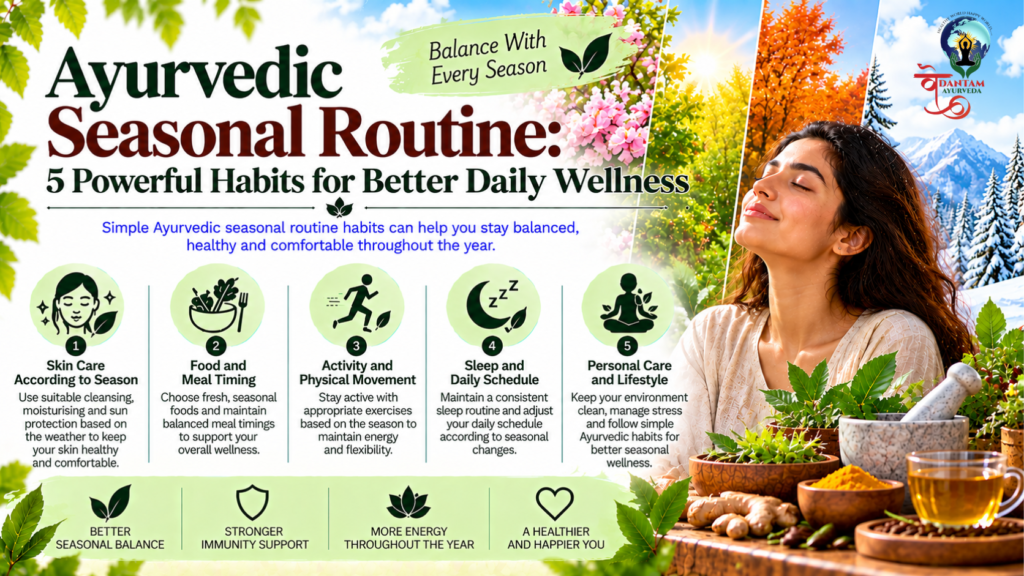
- 5 Powerful Ayurvedic Seasonal Routine Habits
- Ayurvedic Seasonal Routine for Different Seasons
- How to Know When Your Routine Needs Changing
- Common Mistakes
- A Simple Ayurvedic Seasonal Routine You Can Follow
- When Should You Seek Professional Advice?
Our body and daily habits can change with the weather.
Temperature, humidity, daylight, activity levels and food choices may all affect how we feel during different parts of the year. A routine that feels comfortable during summer may not feel the same during cooler or wetter months.
Ayurveda has traditionally given importance to adapting daily habits according to the season. This concept is commonly described as Ritucarya, or a seasonal regimen. The Ministry of Ayush describes Ritucarya as part of Ayurveda’s approach to health promotion and disease prevention, alongside Dinacarya, the daily regimen. (Ayush)
A modern interpretation of an Ayurvedic seasonal routine does not require making your lifestyle complicated. It means observing seasonal changes and making sensible adjustments to food, skin care, sleep, activity and personal comfort.
What Is an Ayurvedic Seasonal Routine?
An Ayurvedic seasonal routine is a daily lifestyle approach that changes according to the season.
Instead of following exactly the same habits throughout the year, you can pay attention to how your body and surroundings change.
For example:
- Hot weather may increase sweating.
- Humid weather may make the skin and scalp feel different.
- Cooler weather can make some people’s skin feel drier.
- Changes in daylight can affect daily schedules.
- Seasonal food availability may influence meal choices.
The purpose is not to follow a rigid rulebook. The purpose is to develop a routine that remains practical and comfortable.
1. Ayurvedic Seasonal Routine for Skin Care
Your skin may respond differently to different weather conditions.
During hot or humid weather, you may notice more sweating or oiliness. During cooler or drier weather, your skin may feel tighter or drier.
Instead of using the same products all year without considering your skin, observe what your skin actually needs.
During Hot Weather
You may prefer:
- Lightweight moisturiser
- Gentle cleansing
- Regular sun protection
- Comfortable clothing
- Showering after heavy sweating
During Dry or Cooler Weather
You may need:
- A richer moisturiser
- Shorter, lukewarm showers
- Gentler cleansing
- More frequent moisturising
- Protection from dry air
The American Academy of Dermatology recommends moisturising dry skin and applying moisturiser after bathing while the skin is still slightly damp. It also recommends gentle, fragrance-free products for people with dry or sensitive skin. (American Academy of Dermatology)
This makes skin care an important part of an Ayurvedic seasonal routine.
2. Ayurvedic Seasonal Routine for Food and Meal Timing
Seasonal changes can also be an opportunity to review your eating habits.
Instead of following complicated seasonal diets, focus on simple principles:
- Eat a balanced variety of foods.
- Choose fresh foods when practical.
- Drink water according to your needs.
- Avoid overeating.
- Keep meal timings reasonably consistent.
- Notice how your body responds to foods.
Ayurvedic traditions place importance on food, lifestyle and seasonal routines. However, individual needs can vary considerably.
A seasonal routine should not mean unnecessarily restricting foods or following a strict diet without a valid reason.
Example
During hot weather, many people naturally prefer lighter meals and fluids.
During cooler weather, some people may prefer warm meals and drinks.
The important point is to maintain a balanced diet rather than assuming one food or drink is suitable for everyone.
3. Ayurvedic Seasonal Routine for Physical Activity
Your activity routine may also need small adjustments.
Very hot weather can make outdoor exercise uncomfortable, while rainy weather can make outdoor walking more difficult.
You can adapt instead of completely stopping movement.
For example:
Hot day:
Exercise during a cooler part of the day.
Rainy day:
Choose indoor movement if outdoor conditions are unsuitable.
Cooler day:
Spend a little more time warming up before more demanding activity.
Busy day:
Use short walking or movement breaks instead of waiting for one long workout.
An Ayurvedic seasonal routine should support regular movement without forcing the body to exercise in uncomfortable or unsafe conditions.
4. Ayurvedic Seasonal Routine for Better Sleep
Seasonal changes can influence your daily schedule.
Longer or shorter daylight hours, changes in temperature and changes in daily activity can affect bedtime habits.
Try to keep a reasonably consistent sleep and wake schedule.
A simple evening routine can include:
- Reduce unnecessary screen use before bed.
- Keep your sleeping environment comfortable.
- Avoid very heavy meals immediately before sleeping.
- Keep your bedtime reasonably consistent.
- Give yourself enough time to relax.
The goal is not to create a complicated nighttime ritual.
Consistency is often more practical.
5. Ayurvedic Seasonal Routine for Personal Care
Personal hygiene can also be adapted to seasonal conditions.
During Humid Weather
Pay attention to:
- Sweat
- Scalp oiliness
- Body odour
- Damp clothing
- Skin irritation
After heavy sweating, changing into clean, dry clothing can improve comfort.
During Dry Weather
Pay more attention to:
- Dry skin
- Dry lips
- Rough hands
- Dry elbows and knees
Moisturising after bathing can help support comfortable skin. (American Academy of Dermatology)
The important point is to respond to actual changes rather than adding unnecessary products.
Ayurvedic Seasonal Routine for Different Seasons
Summer
During hot weather:
- Stay hydrated according to your needs.
- Protect exposed skin from the sun.
- Avoid unnecessary heavy clothing.
- Keep the body clean after heavy sweating.
- Choose comfortable activity times.
Monsoon
During humid or rainy weather:
- Keep the skin and scalp clean.
- Dry wet clothing properly.
- Avoid staying in damp clothes for long periods.
- Pay attention to increased sweating.
- Keep personal-care tools clean.
Autumn and Cooler Weather
As weather becomes cooler or drier:
- Pay attention to skin dryness.
- Moisturise regularly if needed.
- Avoid very hot showers.
- Keep your sleep routine consistent.
- Adjust clothing according to temperature.
Winter
During colder and drier conditions:
- Use lukewarm rather than very hot water.
- Moisturise after bathing.
- Protect exposed skin from cold, dry air.
- Maintain regular movement.
- Keep indoor air comfortable if it becomes very dry.
Dermatologists note that low humidity can contribute to dry skin and recommend moisturising as part of dry-skin care. (American Academy of Dermatology)
How to Know When Your Routine Needs Changing
You do not need to change your entire lifestyle every time the weather changes.
Look for simple signals.
Your skin feels dry
Consider gentler cleansing and more regular moisturising.
You are sweating more
Pay attention to cleansing and changing damp clothing.
Your sleep schedule changes
Review your evening and morning routine.
You feel uncomfortable during exercise
Change the time, location or intensity of activity.
Your usual products start irritating your skin
Stop using products that cause burning, itching or irritation and reassess your routine.
Ayurvedic Seasonal Routine Does Not Mean More Products
A common misunderstanding is that seasonal wellness requires buying different products for every season.
It does not.
You may only need to change a few habits.
For example:
Same cleanser + different moisturiser
or
Same exercise + different exercise timing
or
Same sleep schedule + better protection from seasonal temperature changes
The objective is adaptation, not unnecessary complexity.
Common Mistakes
Following the Same Routine Without Observing Your Body
Your skin, sleep and comfort can change with weather.
Taking Very Hot Showers in Cold Weather
Hot water may feel comfortable temporarily but can worsen dryness.
Overusing Skin Products
Adding more products is not automatically better.
Ignoring Sun Protection
Sun protection remains important even when the weather feels cooler.
Following Strict Seasonal Diet Rules
Seasonal eating should remain balanced and suitable for your individual needs.
Ignoring Persistent Symptoms
Seasonal changes do not explain every health problem.
Persistent symptoms should be assessed appropriately.
A Simple Ayurvedic Seasonal Routine You Can Follow
Morning
Wake up at a reasonably consistent time, drink water according to your needs and adjust clothing according to the weather.
Daytime
Eat balanced meals, remain physically active and protect yourself from excessive heat, cold or sun.
Evening
Keep dinner comfortable and avoid unnecessary stimulation close to bedtime.
Night
Maintain a comfortable sleeping environment and try to follow a consistent sleep schedule.
Weekly
Review how your skin, energy, sleep and daily comfort are responding to the current season.
When Should You Seek Professional Advice?
An Ayurvedic seasonal routine is intended as a general wellness approach, not as a treatment for medical conditions.
Seek appropriate professional advice if you experience persistent:
- Skin rashes
- Severe dryness
- Unexplained fatigue
- Digestive problems
- Sleep problems
- Pain
- Significant changes in health
Also remember that Ayurvedic products are not automatically risk-free simply because they are described as natural. NCCIH notes that some Ayurvedic preparations can contain potentially toxic metals and advises people not to delay conventional medical care when they have a health problem. (NCCIH)
Why Choose Vedantam Ayurveda?
Vedantam Ayurveda focuses on Ayurvedic wellness, traditional therapies and natural lifestyle approaches. The organisation describes Ayurveda as part of its approach to wellness and provides Ayurvedic skin and hair-care services. (NCCIH)
You can learn more about Vedantam Ayurveda and its Ayurvedic services.
Our Contact
- Phone: +91-9205678439
- Email: support@vedantamayurveda.com
- Address: MZL 07/08, Sumedha Tower, Ansal Building, Raj Nagar, Ghaziabad, Uttar Pradesh