
Our hands come into contact with many surfaces throughout the day.
We use them to eat, work, travel, touch phones, open doors and perform countless everyday activities. Because of this, proper hand hygiene is one of the simplest ways to support everyday health.
Ayurvedic hand washing can be viewed as part of a broader Ayurvedic-inspired personal-care routine that gives importance to cleanliness and daily habits.
However, hand hygiene should be based on established practices. Traditional approaches should not replace proper hand washing with soap and water when it is needed.
The Centers for Disease Control and Prevention recommends washing hands with soap and water for at least 20 seconds in key situations, including before eating and after using the toilet.
What Is Ayurvedic Hand Washing?
Ayurvedic hand washing refers to maintaining clean hands as part of an Ayurvedic-inspired daily hygiene routine.
The basic principle is straightforward:
Clean your hands when they are dirty or when hygiene is especially important, then protect the skin from unnecessary dryness.
A good hand-care routine therefore has two parts:
- Proper cleaning
- Skin protection
Washing incorrectly or using harsh products too frequently can leave the hands dry and uncomfortable.
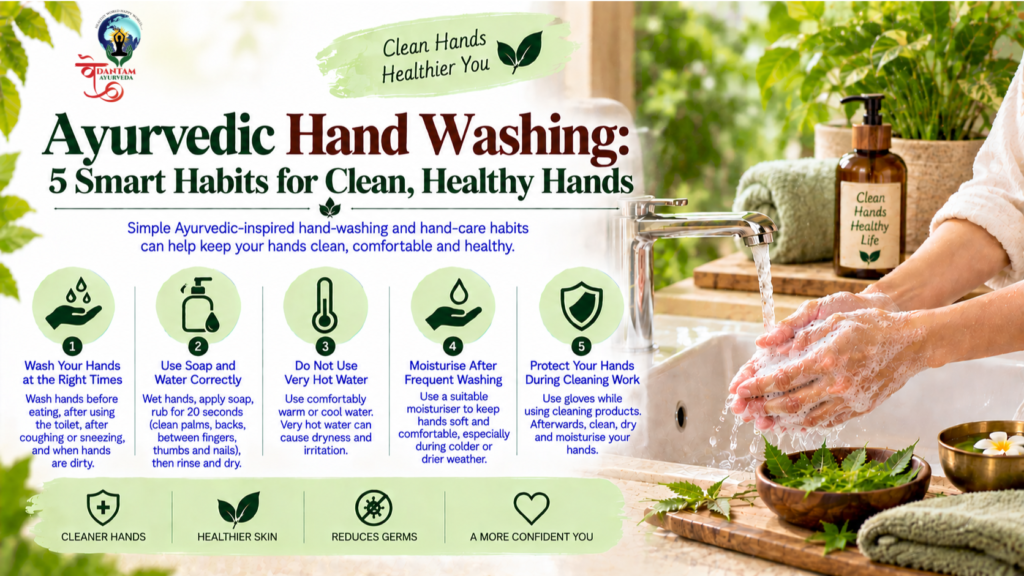
1. Wash Your Hands at the Right Times
You do not need to wash your hands every few minutes without a reason.
Instead, focus on situations where hand hygiene is especially important.
Examples include:
- Before preparing food
- Before eating
- After using the toilet
- After coughing or sneezing
- After handling waste
- After caring for someone who is sick
- After touching visibly dirty surfaces
- After returning from certain outdoor activities
Proper hand washing removes dirt, oils and many germs from the hands.
This is the foundation of Ayurvedic hand washing and everyday hygiene.
2. Use Soap and Water Correctly
Good hand washing is not simply about putting soap on your hands and immediately rinsing it away.
A practical method is:
Step 1
Wet your hands with clean running water.
Step 2
Apply soap.
Step 3
Rub your hands together thoroughly.
Clean:
- Palms
- Backs of hands
- Between fingers
- Around thumbs
- Fingertips
- Under the nails when appropriate
Step 4
Continue rubbing for about 20 seconds.
Step 5
Rinse thoroughly.
Step 6
Dry your hands.
The exact technique matters more than using expensive products.
3. Do Not Use Very Hot Water
Many people believe that very hot water cleans hands better.
It is not necessary.
Comfortably warm or cool running water can be used for hand washing.
Very hot water can contribute to skin dryness, especially when the hands are washed frequently.
For Ayurvedic hand washing, the goal is effective cleaning without unnecessarily irritating the skin.
4. Moisturise After Frequent Washing
Frequent hand washing can make the skin dry.
If your hands feel rough or tight after washing, use a suitable moisturiser.
Pay attention to:
- Fingers
- Knuckles
- Backs of hands
- Around the nails
- Areas that feel especially dry
Moisturising is particularly useful during colder or drier weather.
If a moisturiser causes burning or irritation, stop using it and choose another suitable product.
5. Protect Your Hands During Cleaning Work
Household cleaning products can be hard on the skin.
If you regularly wash dishes, clean bathrooms or handle cleaning products, suitable protective gloves can reduce direct exposure.
After finishing the task:
Remove gloves → clean hands if necessary → dry hands → moisturise.
This simple routine can help reduce unnecessary dryness while allowing you to maintain proper hygiene.
Why Hand Washing Is Important
Hands can transfer germs from one surface to another.
For example, touching a contaminated surface and then touching your face or food can provide a route for germs to enter the body.
Proper hand washing interrupts this process.
That is why hand hygiene is not simply a beauty habit. It is an important part of everyday health.
Ayurvedic Hand Washing and Traditional Personal Care
Ayurveda places importance on daily routines and personal cleanliness.
However, traditional practices should be used sensibly.
For example, adding strong herbs, essential oils or homemade mixtures to every hand wash is unnecessary.
Basic soap and clean running water remain the foundation of hand hygiene.
If you want to include an Ayurvedic-inspired element, keep it gentle and separate from the essential hygiene step.
What About Herbal Hand Wash?
Herbal or plant-based hand-care products may be attractive to people who prefer natural ingredients.
But the word “herbal” does not automatically mean a product will be more effective or gentler.
Consider:
- Whether it cleans effectively
- Whether it irritates your skin
- Whether it has a strong fragrance
- Whether your skin becomes dry after use
The same product may feel comfortable for one person and irritating for another.
Hand Washing vs Hand Sanitiser
Soap and water are generally preferred when hands are visibly dirty or greasy.
A suitable alcohol-based hand sanitiser can be useful when soap and water are not readily available.
However, sanitiser is not a replacement for proper hand washing in every situation.
If your hands are visibly dirty, wash them with soap and water when possible.
Common Hand-Washing Mistakes
Washing Too Quickly
A quick rinse may not clean the hands thoroughly.
Missing the Thumbs
Thumbs are easy to overlook.
Ignoring Fingertips
The fingertips frequently touch surfaces and the face.
Not Drying Hands
Wet hands can transfer germs more easily than properly dried hands.
Using Very Hot Water
Very hot water can contribute to dryness.
Skipping Moisturiser
People who wash their hands frequently may benefit from regular moisturising.
Ayurvedic Hand Washing for People With Dry Hands
If your hands become dry easily, focus on reducing unnecessary irritation.
Try to:
- Use comfortably warm or cool water.
- Avoid unnecessarily harsh cleansers.
- Dry hands gently.
- Apply moisturiser after washing.
- Wear gloves for cleaning work.
- Avoid picking or scratching dry skin.
If your hands remain cracked, painful or inflamed, the problem may be more than simple dryness.
What About Natural Oils?
Oils can be used as moisturising products in some traditional personal-care routines.
If you use an oil on your hands, apply a small amount to comfortable, intact skin.
Avoid applying products to open cuts or irritated areas if they cause stinging.
Also remember that oils do not replace hand washing.
Clean first, moisturise afterward.
That distinction is important.
A Simple Daily Hand-Care Routine
Morning
Wash your hands when needed and apply moisturiser if your skin feels dry.
During the Day
Wash your hands at important times, especially before eating and after using the toilet.
After Cleaning
Wash away cleaning-product residue and moisturise.
Before Bed
Check whether your hands feel dry and apply a suitable moisturiser if needed.
This routine is simple enough to maintain every day.
When Should You Pay Attention to Hand Problems?
Persistent hand problems may require professional evaluation.
Look out for:
- Severe cracking
- Persistent redness
- Swelling
- Burning
- Severe itching
- Painful skin
- Repeated rashes
- Skin that does not improve with basic care
These symptoms can have different causes, including irritation, allergy or skin conditions.
Do not keep adding home remedies if your skin continues to worsen.
Ayurvedic Hand Washing: The Simple Rule
You can remember the entire routine with five points:
Wash properly.
Use soap and clean running water.
Wash at the right times.
Focus on situations where hygiene matters.
Do not over-irritate the skin.
Avoid unnecessarily harsh products and very hot water.
Moisturise.
Support the skin after frequent washing.
Protect your hands.
Use suitable gloves when handling cleaning products.
Why Choose Vedantam Ayurveda?
Vedantam Ayurveda focuses on Ayurvedic wellness and natural personal-care approaches. The organisation describes its work around Ayurvedic wellness, herbal products and natural remedies.
Its services also include personalised skin and hair-care treatments based on Ayurvedic traditions.
You can learn more about Vedantam Ayurveda and its Ayurvedic services.
Our Contact
- Phone: +91-9205678439
- Email: support@vedantamayurveda.com
- Address: MZL 07/08, Sumedha Tower, Ansal Building, Raj Nagar, Ghaziabad, Uttar Pradesh