
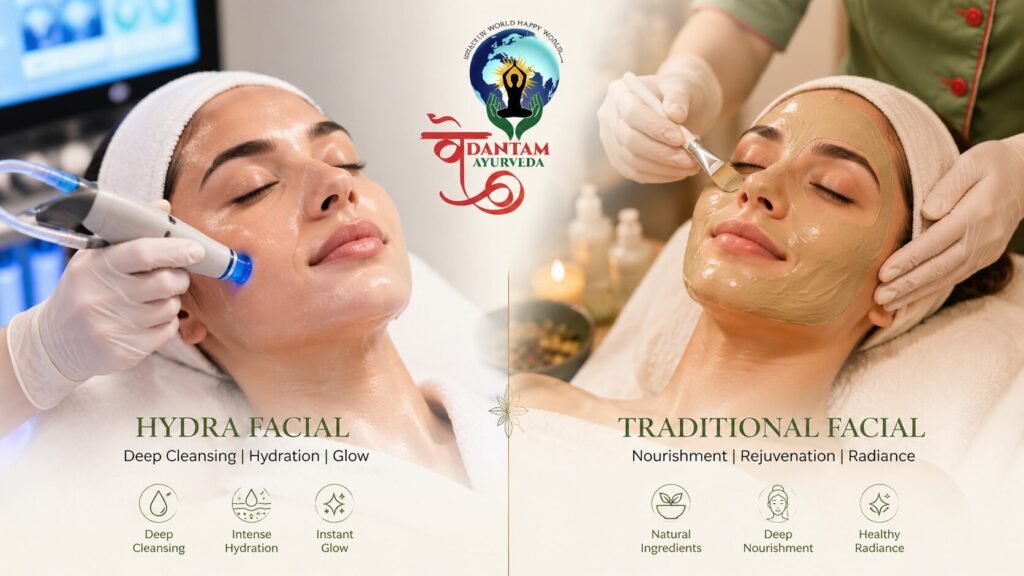
Walk into any skincare clinic today and you’ll hear the same question at the reception desk “Hydra Facial karwana hai ya normal facial?” It’s a fair confusion. Both promise glowing skin, both take under an hour, and both sound impressive on an Instagram reel. But once you look past the marketing, the two treatments work quite differently, and picking the wrong one for your skin can mean paying more for results you could’ve gotten for half the price or the other way round, settling for a basic clean-up when your skin actually needed deeper care.
This guide breaks down what separates a Hydra Facial from a regular facial the technique, the cost, the results, and which one makes more sense depending on your skin type and budget.
So, What Exactly Is a Hydra Facial?
A Hydra Facial is a machine-assisted treatment that cleanses, exfoliates, extracts, and hydrates your skin all in one sitting. Instead of a therapist manually squeezing out blackheads or scrubbing your face with a brush, a small vacuum-powered device does the heavy lifting. It suctions out dirt and dead skin while pushing in serums packed with hyaluronic acid, antioxidants, and peptides at the same time.
The result is skin that feels genuinely clean rather than just wiped down and because it’s largely painless, most people walk out with zero redness or downtime.
What it typically does for your skin:
• Clears out clogged pores properly
• Softens blackheads without the harsh squeezing
• Pulls moisture deep into dry patches
• Evens out rough or bumpy texture
• Leaves an almost immediate “just glowed up” look
And a Regular Facial?
This is the facial most of us grew up getting cleansing, a round of steam, manual extraction, a face massage, a pack, and finally a moisturizer to finish it off. It’s simple, it’s relaxing, and it does a decent job of keeping your skin fresh between deeper treatments.
Where it falls short is depth. Since everything is done by hand with standard products, a regular facial cleans the surface well but rarely reaches the same level of hydration or pore-clearing that a Hydra Facial manages.
Quick Side-by-Side Comparison
| Feature | Hydra Facial | Regular Facial |
| Treatment Type | Machine-assisted | Manual |
| Cleansing | Deep pore-level | Surface-level |
| Hydration | Intensive | Moderate |
| Extraction | Vacuum technology | Manual |
| Downtime | None | Minimal |
| Comfort | Smooth, comfortable | Occasional mild discomfort |
| Session Time | 30–45 minutes | 45–60 minutes |
| Suitable For | Almost all skin types | Depends on products used |
| Glow Lasts | 3–4 weeks | 1–2 weeks |
Where the Real Difference Lies
It really comes down to the method. A Hydra Facial relies on technology to do a more thorough, consistent job the suction reaches into pores that fingers simply can’t, and the serum infusion happens right when the pore is open, so hydration actually sinks in instead of sitting on the surface. A regular facial, being entirely manual, depends heavily on the therapist’s skill and the products used that day, which means results can vary from one session to the next.
Why People Choose Hydra Facial
It’s become one of the most requested treatments at skincare clinics for a simple reason it does five jobs (cleansing, exfoliating, extraction, hydration, and antioxidant protection) in a single sitting instead of spreading them across multiple visits.
Most people notice:
• Genuinely clean, decongested pores
• Fewer blackheads and whiteheads over time
• Skin that feels hydrated rather than tight
• A visibly smoother, more even texture
• Less dullness, more of that “lit from within” look
Why Regular Facials Still Have Their Place
Not everyone needs (or wants) an intensive treatment every month. Regular facials remain popular because they’re affordable, easy to book, and honestly relaxing. They clear out surface oil, boost blood circulation, and give tired-looking skin a quick refresh, which is exactly what a lot of people are after for routine upkeep.
What About the Cost?
There’s no getting around it Hydra Facial costs more. It uses specialised equipment and professional-grade serums, and that shows up in the price. Regular facials stay budget-friendly because they rely on manual technique and standard products you’d find at most salons.
Pricing also shifts based on the clinic you visit and where it’s located, so it’s worth checking with your dermatologist or skin clinic directly for an accurate quote.
Which One Suits Your Skin Type?
Oily skin Hydra Facial handles excess oil and pore congestion far more effectively than manual extraction alone.
Dry skin the serum-infusion step makes Hydra Facial a strong pick here; it delivers moisture where a regular facial’s moisturiser only sits on top.
Sensitive skin Hydra Facial is usually gentle and can be customised, but it’s still worth a quick consult with a skincare professional before booking.
Acne-prone skin fine for mild acne and congestion, but if you’re dealing with active breakouts or an infection, see a dermatologist first rather than going straight for a facial.
Mature skin the added hydration can visibly soften fine lines and improve texture over a few sessions.
Before a Wedding or a Big Event?
If there’s a wedding, a shoot, or any occasion where you want your skin looking its best without any redness the next day, Hydra Facial is generally the safer bet it hydrates instantly and leaves no downtime. Most skincare professionals suggest booking it two to three days before the event, not the same day, so your skin has a little time to settle.
Any Side Effects to Watch For?
Both treatments are safe when done by a trained professional, though minor, temporary reactions can happen.
With a Hydra Facial, you might notice slight redness, a bit of sensitivity, or mild tightness usually gone within a few hours. Regular facials can occasionally leave the skin a little irritated after manual extraction, along with some temporary sensitivity.
If you already deal with active acne, eczema, rosacea, or any diagnosed skin condition, it’s best to check with a dermatologist before either treatment.
Taking Care of Your Skin After a Hydra Facial
• Keep yourself well hydrated through the day
• Don’t skip sunscreen, even indoors
• Stay out of direct sun for the first 24–48 hours
• Stick to a gentle cleanser for a few days
• Keep the skin moisturised
• Hold off on strong exfoliants right after treatment
• Follow whatever aftercare your practitioner specifically recommends
Weighing the Pros and Cons
Hydra Facial deep cleansing, real hydration, an instant glow, and no downtime, but it costs more and needs repeat sessions to maintain results.
Regular Facial light on the pocket, relaxing, and easy to find anywhere, but the glow fades faster and manual extraction can occasionally be a bit uncomfortable.
Is a Hydra Facial Worth the Extra Cost?
If deeper cleansing, better hydration, and longer-lasting results matter to you, then yes it’s a reasonable investment. But if you just want a monthly refresh without spending too much, a traditional facial does the job fine. It really comes down to what your skin needs and what you’re comfortable spending.
A quick note: everyone’s skin reacts differently. If you have severe acne, active infections, rosacea, or eczema, talk to a qualified dermatologist before committing to either treatment.
The Bottom Line
Both treatments have a place in a skincare routine. Regular facials are great for upkeep and relaxation at a lower cost, while Hydra Facial goes a step further with deeper cleansing, better hydration, and results that simply last longer. If your priority is brighter, more hydrated skin with minimal effort afterward, Hydra Facial is usually the one worth choosing though a quick consult with a skincare professional never hurts before you decide.