
Alopecia For Cure
Alopecia: Understanding the Root Causes and Ayurvedic Cure
By Vedantam Ayurveda
Vedantam Ayurveda
+91-9205678439
MZ 07/08, Sumedha Tower, RDC, Block 1,
P & T Colony, Raj Nagar, Ghaziabad,
Uttar Pradesh 201002, India
Vedantam Ayurveda in Ghaziabad offers natural hair restoration as a treatment for alopecia.
Hair is frequently seen as one of the most obvious indicators of youth, beauty, and vitality. A person’s appearance, self-esteem, and emotional health are all impacted when their hair starts to thin or fall out, whether in the form of patchy bald spots or widespread thinning. Finding answers to hair loss can be a stressful experience for many people. Traditional therapies might not work for everyone, have unintended consequences, or have inconsistent outcomes. In this case, a natural, holistic method like Ayurveda can offer a gentle yet efficient way to restore the health of your hair.
Alopecia—or hair loss—affects millions across the world, causing not only cosmetic concern but also deep emotional distress. In the context of modern medicine, alopecia includes various types such as androgenetic alopecia (male/female pattern hair loss), alopecia areata (patchy hair loss), telogen effluvium (diffuse shedding), scarring alopecias, and others.
At Vedantam Ayurveda, we believe that true “cure” lies not merely in suppressing symptoms, but in restoring balance to the body, revitalizing hair follicles, and preventing recurrence. Here is our comprehensive Ayurvedic perspective on alopecia and how we treat it.
Ayurvedic View of Hair Loss (Alopecia)
In Ayurveda, hair (keṣa) is considered a byproduct of Rakta dhātu (blood tissue) and Mamsa dhātu (muscle/flesh tissue) nourished by the proper balance of Rasa (nutritive fluid). Hair health depends largely on the integrityof the Vata,, Pitta, and Kapha doshas.
-
When Pitta is aggravate (e.g.,. due toheat, stress,,or inflammation),, it can damage hair follicles, leading to hair fall.
-
Vata imbalance can cause dryness and weakening of root support.
-
Kapha stagnation can block circulation in the scalp.
Moreover, Ama (toxins/undigested metabolic waste) obstructing micro-channels (srotas) to the scalp can suffocate follicles.
Thus,alopeciaa may be conceptualized as:
-
Dosha imbalance (especially Pitta-Vata),
-
Dhatu depletion or poor nourishment of hair tissue,
-
Srotodushti (blockage or damage of channels feeding follicles), and
-
Aggravation ofam/oxidativee stress.
Common Causes & Aggravating Factors (From Both Ayurveda & Modern Science)
| Factor | Ayurvedic Interpretation | Modern/Clinic all Insight |
|---|---|---|
| Stress, emotional trauma | Vata and Pitta vitiation | Stress triggers cortisol and microinflammation |
| Poor diet, nutritional deficiency | Inadequate Ahara to dhatus | Deficiencies in protein, iron, biotin, zinc etc. |
| Hormonal imbalance (thyroid, androgens) | Endocrine imbalance affects doshas | DHT and, thyroid disorders influence hair cycle |
| Scalp inflammation, dandruff | Pitta aggravation and ama | Seborrheic dermatitis, fungal infection |
| Chemical treatments, harsh hair cosmetics | ExternalPitta/Vataa aggravation | Damage to keratin, oxidative stress |
| Genetic predisposition | Prakriti (constitution) influence | Family history of androgenetic alopecia |
Ayurvedic Treatment Protocol at Vedantam Ayurveda
Our treatment plan aims to:
-
Pacify the aggravated doshas (especially Pitta and Vata)
-
Detoxify and remove ama
-
Strengthen scalp circulation and nourish follicles
-
Restore dhatus (Rasa, Rakta, Mamsa)
-
Prevent recurrence through lifestyle and diet
Below is a multi-modal treatment outline:
1. Panchakarma & Detoxification
-
Virechana (therapeutic purgation): Helps eliminate aggravated Pitta toxins from the body.
-
Vamana (therapeutic emesis), Basti(medicated enema),,and Nasyaa (nasal administration) may be used selectively based on individual doshic assessment.
-
Raktamokshana (bloodletting / leech therapy): In specific cases of severe Pitta vitiation, to purify the blood and relieve inflammatory burden.
2. External Therapies (Shodhana / Shamana)
-
Shirodhara with cooling herbal oil (e.g., Brahmi, Bhringaraj,,and Amlaa blends) to calm aggravated Pitta and Vata.
-
Parisheka / Upanaha (herbal fomentation / poultices)on the scalpp to reduceinflammationo andheat andd open micro-channels.
-
Hair Oil Massage (Abhyanga) with prescribed herbal oils to improve microcirculation.
-
Nasya (herbal nasal drops) may support upward channel regulation and indirectlybenefitethe headd region.
3. Oral Ayurvedic Medicines (Shamana / Rasayana)
Herbal formulations are tailored to the patient’s constitution and severity of imbalance:
-
Bhringaraj (Eclipta alba) & Amla (Emblicaofficinalis)—classicc herbs for hair growth and Pitta regulation
-
Triphala, Amalaki, Guduchi, Haritak—too detoxify and nourish
-
Ashwagandha (Withania somnifer)—an– adaptogen to combat stress
-
Shatavari, Yashtimadhu,Bal—hormonall support and nourishment Alopecia For Cure
-
Medicated hair tonics such as “Hair Prash,” “De-Fall PremiumHair Oil,”” etc. (as seen on your product roster)
-
Internal rasayanas (rejuvenative tonics) to strengthen dhatus and immunity
These medicines are administered in phases: palliative (shamana) during active hairfall and then rejuvenative (rasayana) for longer-term strengthening.
4. Diet & Lifestyle (Ahara-Vihara)
-
Cooling, Pitta-pacifying diet: Include sweet, bitter, and astringent tastes; avoid spicy, sour, deep-fried, excessively salty foods
-
Protein-rich whole foods: legumes, mung dal, lean meat (if nonvegetarian), dairy (if tolerated), nuts
-
Plenty of vegetables & fruits (especially green leafy, amla, pomegranate)
-
Hydration: maintain optimal water intake
-
Avoid stimulants & processed junk foods
-
Adequate sleep, stress management (yoga, pranayama, meditation)
-
Scalp care: avoid tight hairstyles, harsh chemicals, frequent heat treatments
5. Supportive Therapies & Monitoring
-
Dhatri (herbal scalp packs), medicated shampoos and hair masks
-
Low-level laser therapy or micro-needling (if acceptable) as adjuncts
-
Periodic blood tests (iron, thyroid, vitamin B12, D, ferritin) to monitor systemic health
-
Follow-up consultations every few weeks to adjust formulations
A Case Illustration (Hypothetical Example)
Ms. A, aged 28, presented with patchy hair loss (alopecia areata) of 4 months duration, along with symptoms of acidity, anxiety, and heat intolerance.
Ayurvedic Diagnosis: Pitta-Vata Prakopa, ama obstruction of scalp srotas, Rakta dhatu depletion.
Treatment Plan:
-
Initial detox: Mild virechana + Triphala kwath
-
External: Shirodhara (cooling oil), scalp fomentation with coriander & aloe vera
-
Oral herbs: Bhringaraj + Amalaki decoction, Ashwagandha, Rasayana Alopecia For Cure
-
Diet: cooling, Pitta-pacifying meal plan
-
Support: hair packs with neem, bhringraj, fenugreek
Outcomes after 3 months: regrowth of hair in patches, reduced shedding,improved digestion,n and mentalcalm. .Treatmentwast extendedfor a furtherr 6 months with rasayana support to maintain results and prevent relapse.
Why Choose Vedantam Ayurveda for Alopecia Cure?
-
Holisticapproach—wee don’t only mask symptoms but remove root causes.
-
Customizedprotocol—eachh patient receives individualized herbal combinations, not one-size-fits-all. alopecia
-
Research-based herbs andformulations—combiningg classical Ayurvedic wisdom with modern insights.
-
Combination of internal and external therapies for synergy.
-
Follow-up & relapse prevention builtinto the caree plan.
-
Transparent communication & patient education: we explain dietary, lifestyle, and stress-related contributors.
Precautions & Realistic Expectations
-
Hair cycles areslow—visiblee improvement may take 3–6 months or more, depending on severity and underlying health.
-
In scarring alopecia, where follicles are permanently damaged, full regrowth may not always bepossible—focuss then shifts to slowing progression and cosmetic support.
-
Always cross-check systemic conditions (thyroid, autoimmunity, hormonaldisorders)—Ayurvedicc therapy works best when integrated with necessary conventional care.
-
Discontinue harsh external stimulants (strong steroids, minoxidil without supervision) if conflictingwith the Ayurvedicc plan.
-
Adhere to consistent therapy and lifestyle; intermittent or halfhearted treatment yields weak results.
Herbs and Therapies Encouraged by Conventional Knowledge and Current Applications
Many of the centuries-old techniques used in Ayurvedic hair loss treatments are still applicable and well-liked today.
Because of its capacity to activate dormant follicles, promote regeneration, and fortify existing hair, bhringraj is frequently referred to as the “king of hair herbs.”
Consult Ayurveda
+2
India’s Ayurveda +2
Amla, which is high in antioxidants and vitamin C, nourishes the scalp, lowers inflammation, and promotes healthy hair growth and coloration.
Consult Ayurveda
+1.
Brahmi soothes the nervous system, increases blood flow to the scalp, and can lessen hair loss brought on by stress.
Consult Ayurveda
+1.
Neem and Shikakai aid in infection prevention, scalp cleansing, and scalp hygiene without depleting natural oils.
Consult Ayurveda
+1.
Using herbal shampoos and natural hair oils promotes slow, sustained regrowth and enhances scalp health.
Jiva.com
+2
India’s Ayurveda +2
More modern knowledge of Ayurvedic scalp and hair care indicates that avoiding harsh chemical hair products, using natural oils, getting frequent scalp massages, maintaining a balanced diet, and reducing stress can all assist to improve hair health.
India’s Ayurveda +2
Odisha TV +2
Who Stands to Gain and What to Anticipate
Vedantam Ayurveda’s services are intended for anyone who are dealing with any of the following:
Hair loss in patches, such as alopecia areata
Diffuse hair loss or generalized thinning (telogen effluvium)
Hair loss patterns in both men and women
Hair loss brought on by stress
Problems with the scalp, such as infection, dandruff, and dryness
Hormonal changes causing postpartum hair loss or hair loss
Many clients have reported noticeable hair growth, better scalp health, and decreased shedding since we address the root reasons rather than simply the symptoms. Depending on the patient’s condition and the consistency of treatment, these results can occur anywhere from a few weeks to several months.
Vedantamayurveda.in +1
It’s crucial to remember that outcomes differ depending on a number of factors, including the kind of alopecia, its severity, duration, general health and lifestyle, and treatment compliance. The progressive, gentle, and holistic nature of Ayurvedic therapy may appeal to people looking for low-risk, natural alternatives as opposed to rapid fixes.
Conclusion
Alopecia may appear as a superficial problem of hair, but in Ayurveda, it reflects internalimbalances—offf doshas, bodily channels, and tissue nourishment. The true “cure” lies in restoring systemic harmony, detoxifying deep tissues, and strengthening hair follicles from within.
At Vedantam Ayurveda, our mission is to revive your hair growth sustainably, safely, and holistically. If you or a loved one is struggling with hair loss, we welcome you to consultus at::
Vedantam Ayurveda
MZ 07/08, Sumedha Tower, RDC, Block 1,
P & T Colony, Raj Nagar, Ghaziabad,
Uttar Pradesh 201002
Contact: +91-9205678439
Let us help you embrace confidence again, naturally.
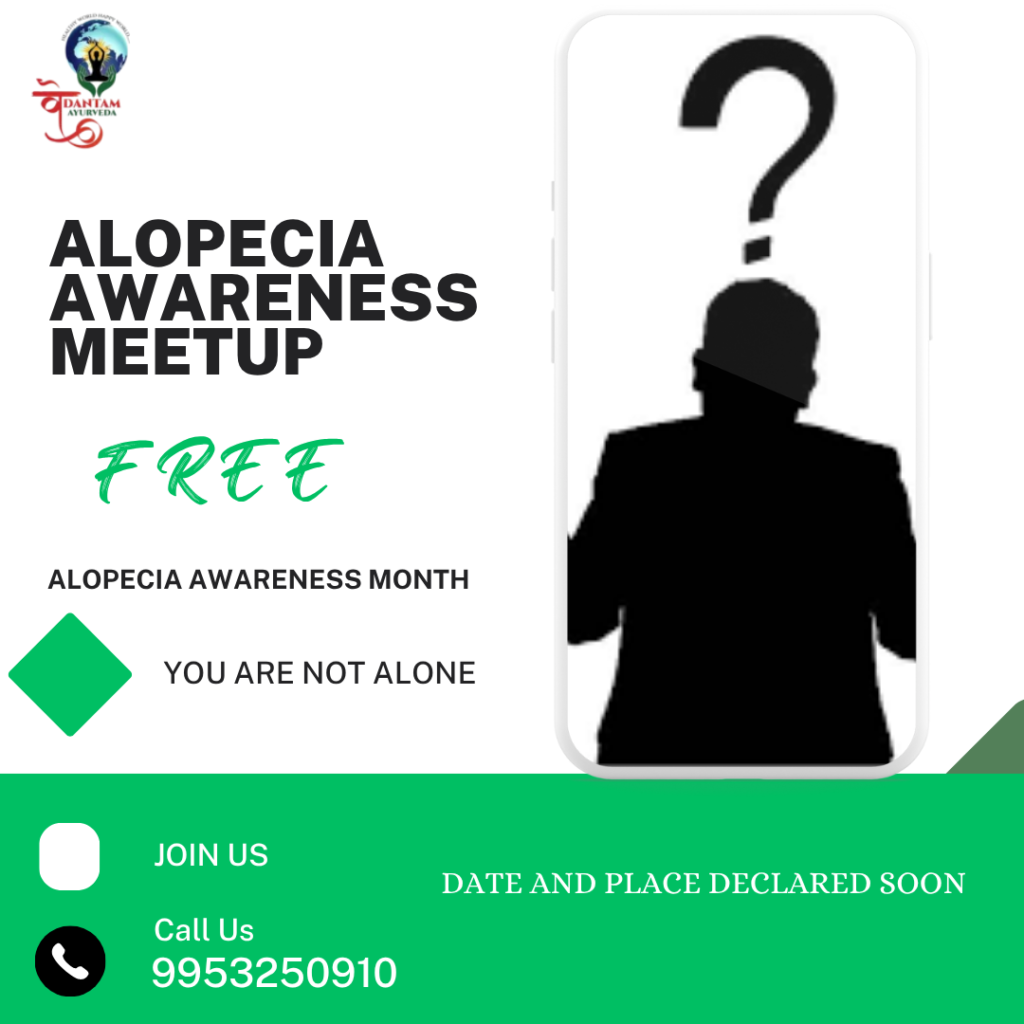
Free Alopecia Awareness Meetup | Join Dr. Bansal for Support & Solutions
Are you or your loved onessuffering from alopecia,ghairr fall or baldness?? You’re not alone!
Dr. Bansal Hair Rebirth Centreis organizing a FREE meetupp for alopecia warriors,, where you can:
✅ Connect with people facing the same challenges
✅ Learn about the latest alopecia treatments & solutions
✅ Get expert guidance from Dr. Bansal
✅ Find hope, confidence, and support
📍 Address: UGF, Ansal Sumedha Tower, RDC, Raj Nagar, Ghaziabad
📞 Contact: +91-9953250910, 8595340077
🌐 Visit: https://drbansalhairrebirthcenter.com/
INSTAGRAM—/dr.bansal_579888
YOUTUBE – / @drbansalhairrebirthcentre
TWITTER – bansaltreatmentt
FACEBOOK – / drbansal57